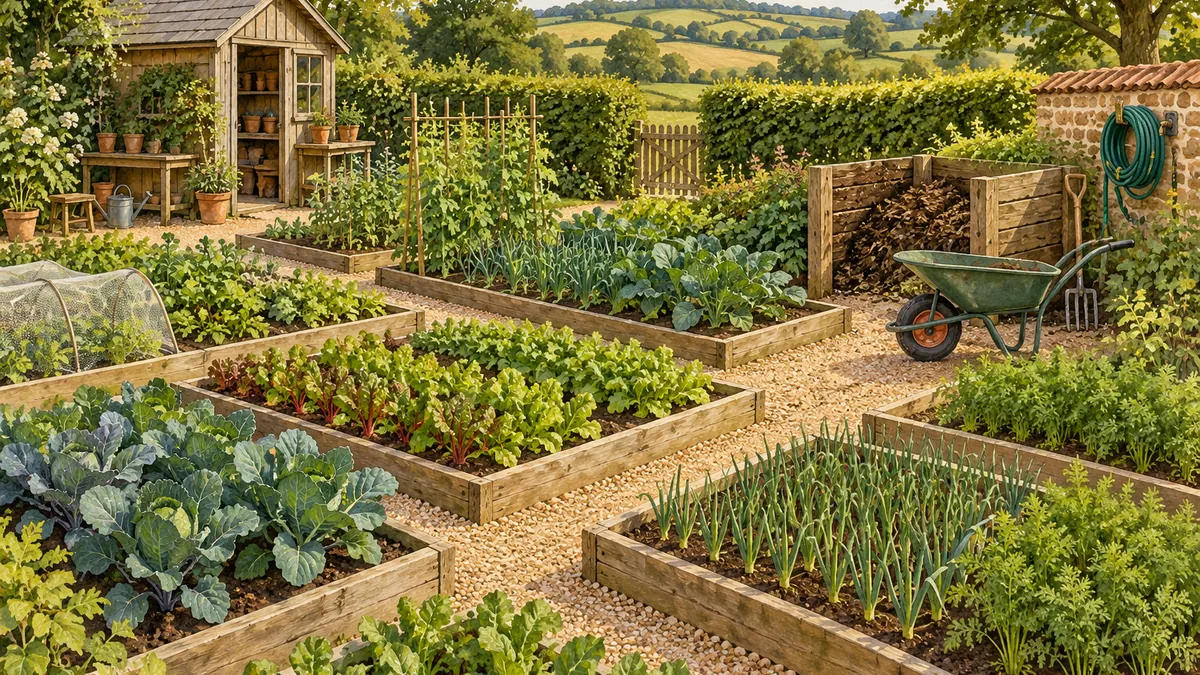
Map the water journey
Mark water sources, growing areas and the routes between them. Record what is already available and how watering is currently carried out. Include the time spent moving, connecting, putting away and maintaining equipment.
Ask an appropriate supplier to assess any installation requirements. Do not assume a long hose or a larger pump resolves every problem with water supply.
Separate plant needs from equipment capacity
Use crop-specific guidance to understand the watering objective. RHS advice on watering vegetables and fruit explains why needs differ with crop and conditions. Avoid applying a single daily volume to every bed from this article.
Tell the supplier which areas need serving and whether they are intended to operate together or separately. Ask what measurements they require to assess the source and system, rather than guessing flow or pressure.
Consider access and storage
Trace where hoses or pipes would cross walking and machinery routes. Ask how the proposed arrangement will be protected, identified and put away where necessary. Include connectors, supports and storage in the quotation rather than comparing hose prices alone.
Keep clean-water arrangements separate from equipment used for other materials. Ask about the requirements relevant to the source and intended installation, including protection of the water supply. Obtain competent advice rather than improvising connections.
Make expansion a question, not an assumption
If more beds are planned, explain that now. Ask what part of the system can be extended and what would need reassessing. A component described as expandable does not establish that the original source can serve every future area.
Review real use
After a representative period, record watering time, awkward connections, leaks reported and equipment that was difficult to store. Compare those observations with the original brief before buying further components.
Visit the ground-work hub for related planning. A useful watering plan connects plants, supply, routes and daily handling; the shopping list comes after those questions.